
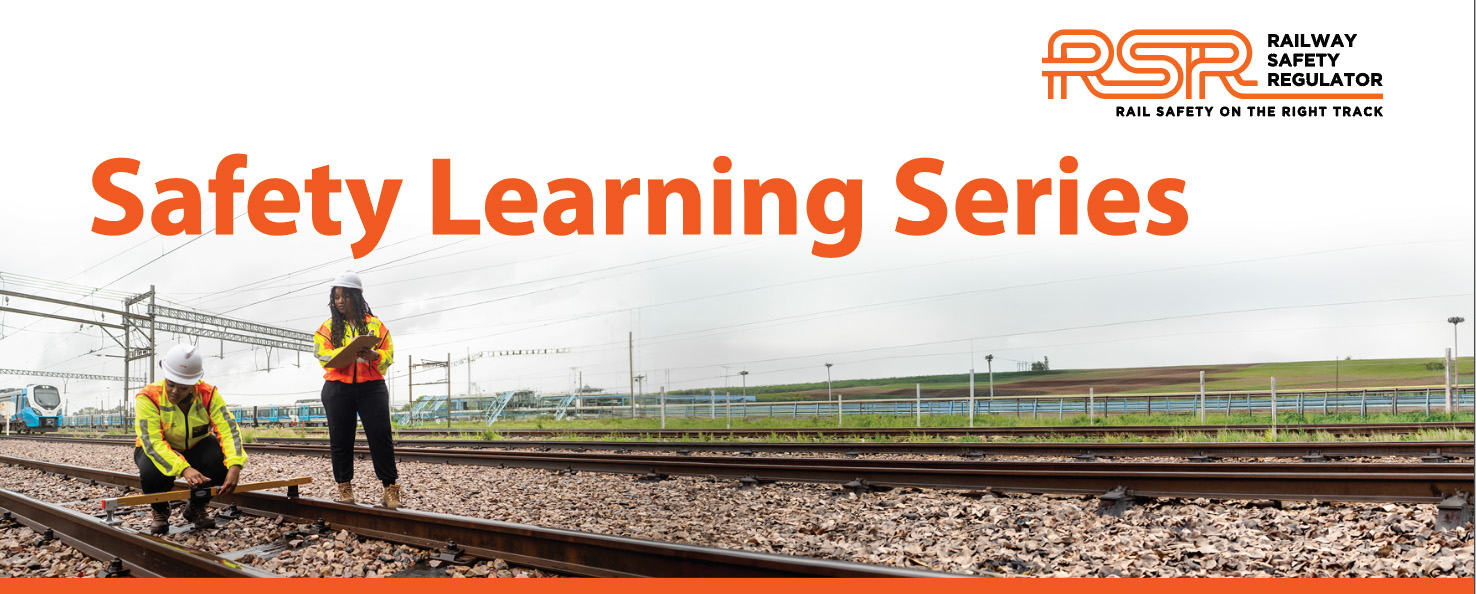
Safety in the rail sector does not happen by chance. It is the outcome of deliberate regulation, consistent oversight and firm enforcement.
The Railway Safety Regulator (RSR) has launched its Safety Learning Series, an industry education initiative to sharpen understanding across the sector and to reinforce a culture where safety is not negotiated. We begin with the foundation, the RSR mandate.
The mandate defines the Regulator’s authority and responsibility to control risk across the railway environment. It is not a passive framework. It is an active system that governs who operates, how operations are conducted and what consequences follow when safety standards are not met.
At its core, the mandate is executed through the following integrated areas:
Regulatory Oversight and Compliance
The most visible aspect of the RSR’s work lies in regulatory oversight and compliance. Before any operator enters the rail environment, they must obtain a safety permit. This is not a formality; it is a rigorous process that ensures operators meet strict safety requirements.
Safety Assurance and Capability Development
Safety is only as strong as the people and systems behind it. The RSR will license safety-critical personnel, evaluate and register training institutions and develop and strengthen railway safety standards that define the baseline for safe operations across the sector.
Technology and Infrastructure Oversight
No new works or new technologies with safety implications are introduced into the rail environment without regulatory scrutiny. The RSR reviews and approves technical submissions to ensure that innovation does not introduce unmanaged risk and that all developments integrate safely into the national rail network.
Data, Reporting and Research
Effective regulation depends on evidence. The RSR maintains a national railway safety information system to monitor performance and trends. It publishes the annual State of Safety Report to ensure transparency and accountability and undertakes research to anticipate emerging risks and inform future interventions.
Strategic Alignment and Harmonisation
Rail does not operate in isolation. It is the mandate of the RSR to drive the harmonisation of safety standards across South Africa and the SADC region to ensure consistency, interoperability and a shared safety baseline across borders.
These functions operate as a single system. They enable proactive risk management, strengthen accountability and ensure that safety performance is continuously measured and improved.
For industry stakeholders, understanding this mandate is not optional. It defines regulatory expectations and clarifies the shared responsibility required to achieve Zero Harm. Compliance is not the end state. It is the minimum requirement.
Over the coming months, this series will interrogate each component of the mandate in practical terms, highlighting what it means for operators and where gaps continue to persist.
A safe railway system is built on clarity, discipline and accountability. The RSR mandate provides that structure.
© RSR - Railway Safety Regulator 2024 - All Rights Reserved.